Bill ahead of the work, as far as you have agreed to

Two related changes this week, both from the same request: a client wanted to close their books in one calendar year for work that runs into the next.
Bill ahead of the work, as far as you've agreed to
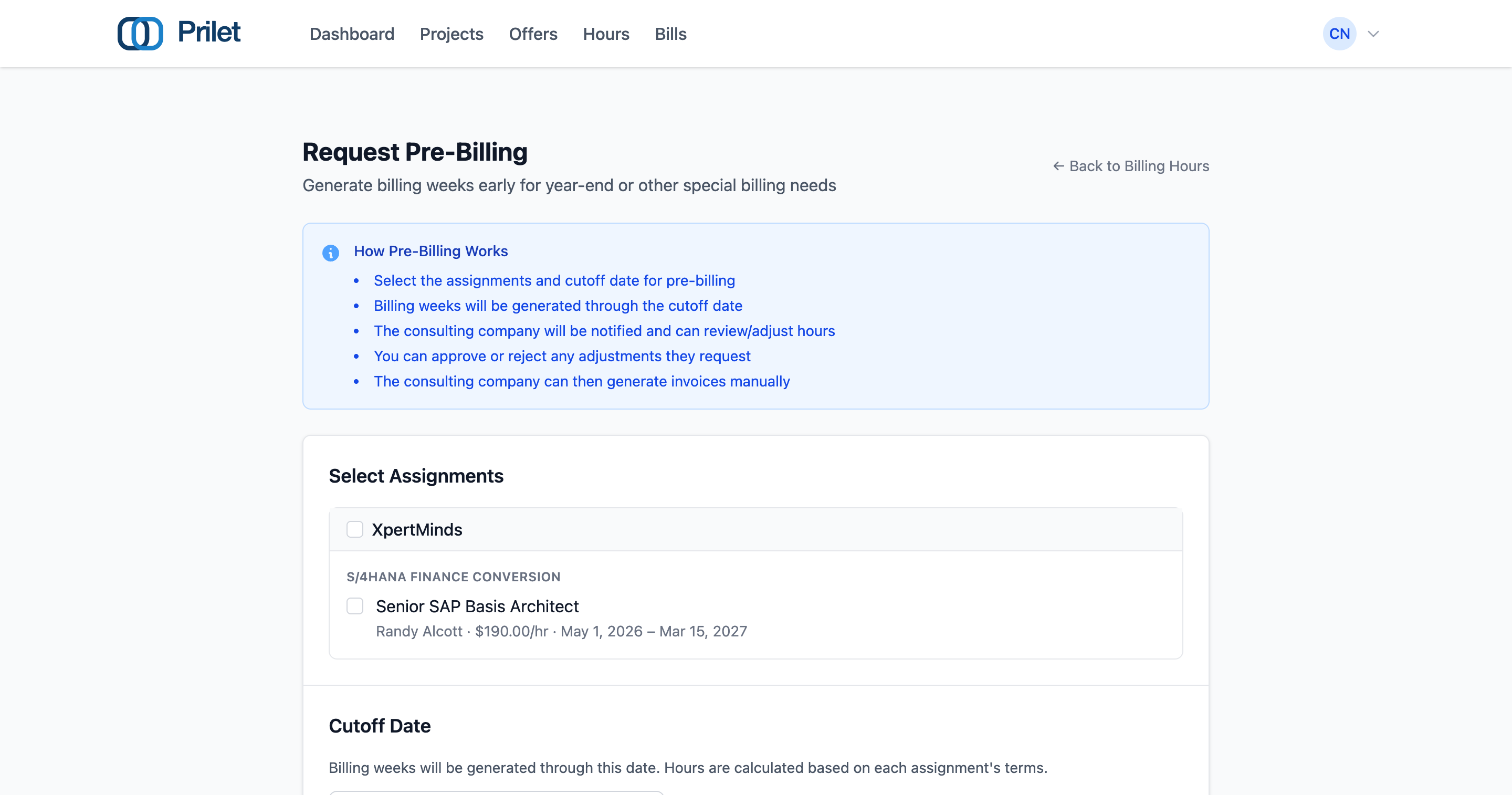
A client closing their books in December for work running into February couldn't be invoiced for it, because a billing week didn't exist until the week itself had ended — there was nothing yet to bill. That's fixed: the hiring company can now request billing weeks for a future period directly, from their Billing Hours page. They pick which assignments to pre-bill and a cutoff date, and Prilet generates the weeks through that date, the same way it always would have once each week actually passed.
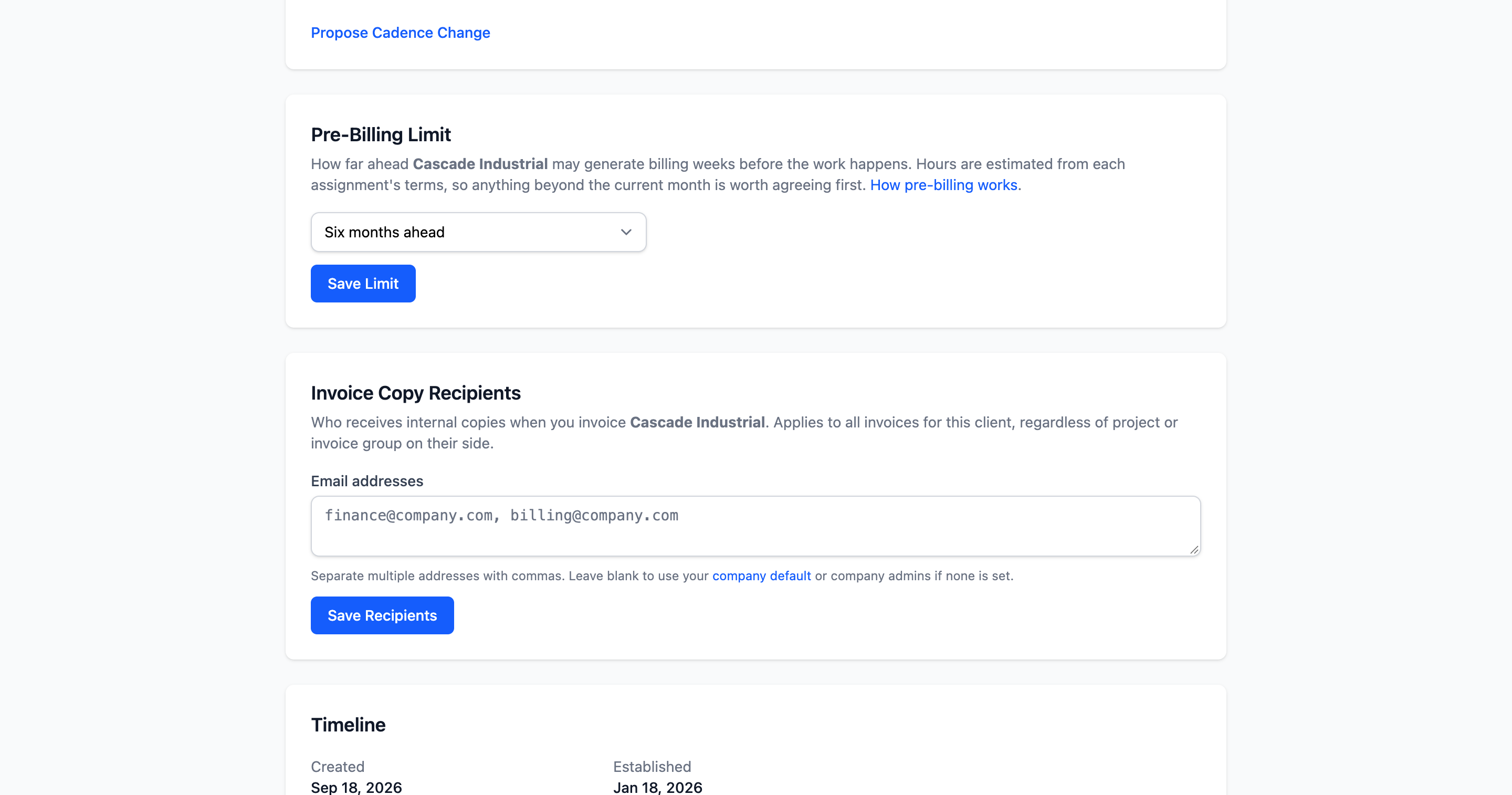
How far ahead is a setting on the agreement, and it's the consulting company's call — not the client's. By default it's set to the current month, which is enough for the case that comes up most: a client wants December invoiced before December is actually over, so in the first week of the month you generate all of it and send the invoice, rather than waiting for the 31st to pass on its own. Open the horizon further and a client can ask for more — one month ahead, three months, a year. Whatever it's set to is the hard limit; a request past it is refused.
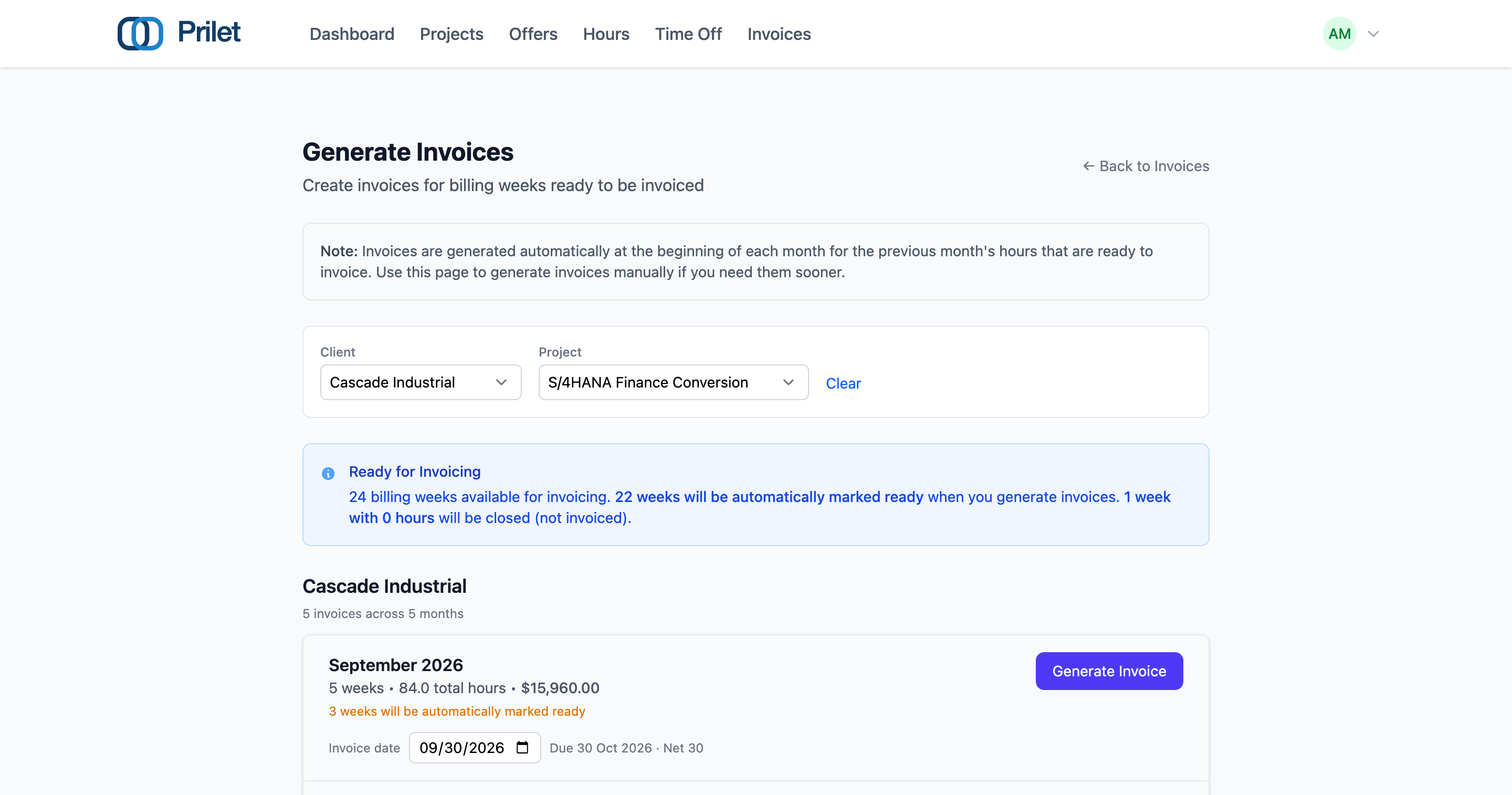
Once those weeks exist, they behave like any other billing week: the consulting company is notified, can request adjustments, and — once a week is ready — generate an invoice for it manually from their own Generate Invoices screen. Nothing about invoicing pre-billed work is different from invoicing a normal week; it's just further out on the calendar than a week usually gets to be.
One thing worth knowing if you're picturing how this interacts with the regular schedule: the job that creates billing weeks each day only ever creates a week once. If pre-billing has already generated a given week, that daily job sees it's already there and leaves it alone — it doesn't reset it, duplicate it, or wait for pre-billing to "catch up." The two paths write to the same table and never step on each other.
And it isn't permanent. A pre-billed week that hasn't been touched yet — no adjustment requested, nothing invoiced — can be removed from its own page, one at a time. Everyone who was notified about it is told it's gone.
One invoice per card, grouped by client
The Generate Invoices screen used to show one card per client per month, and that one card could quietly turn into several invoices — a client who files each project separately would get one invoice per project, with the card only able to mention that in a note underneath.
Each card is now one invoice: named by its project or invoice group where a client splits them, with its own date and its own button, grouped under the client it belongs to rather than interleaved by month. And there's no more "Generate All." It used to send every invoice on the page in a single press — on a screen that can now hold a year of pre-billed work — and every one of those invoices was emailed to the client the moment it was created. Filters for client and project take its place: narrow to the one you mean, and send it.
Also shipped
- Expenses are invoiced one report at a time, for the same reason.
- A bank transfer is matched on its amount when the payer quoted no invoice number, and the padding some banks add to a reference no longer prevents a match.
- Every invoice carries its number where the payer will look for it.
- Getting paid needs a US bank account, and the signup form says so before you reach the end of it.
- A margin tier set at project level is blended across the whole project rather than the category's share of it.
- You're told when a payout comes back, with the date it was sent and, if it was returned, the date that happened.