Both sides are warned before an assignment runs out

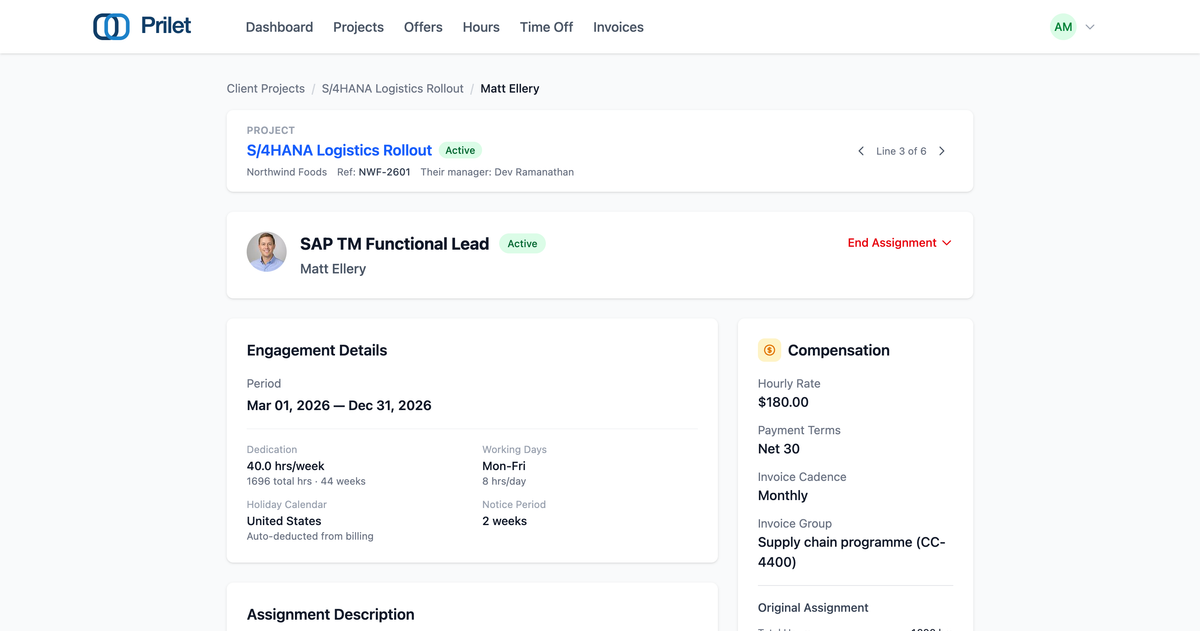
An assignment ending is rarely a surprise to the calendar and often a surprise to the people on it. Both sides now hear about it while there is still time to do something.
Both sides are warned before an assignment runs out
An assignment reaching its end date now tells the firm and the client ahead of time, rather than simply stopping.
A client is no longer told who the subcontractor is
On subcontracted work, notices to the client named the subcontracting firm. The client's relationship is with the prime, and the notices now say so.
⏳
Warnings go to the consultant and the client, keyed to the notice period in the agreement rather than a fixed number of days.
Also shipped
- A bundle can quote a schedule and say who it is for.
- A client can delete a project they built from a bundle.
- Both sides of a project see the same hub
- Invoice copy recipients can be set per client, with a company default behind them.
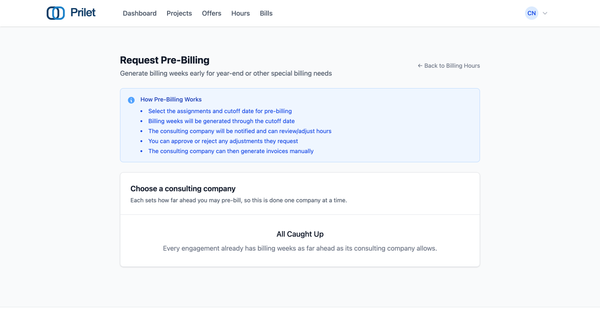
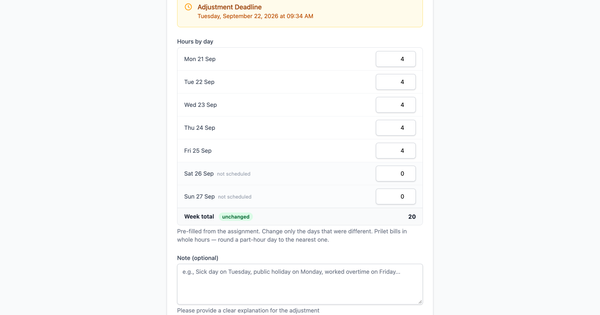
- Pre-billing handles year-end close properly.
- Dashboard counters refresh on their own while the page is open.
- Job costing refreshes itself while a QuickBooks posting runs.
- Correct or withdraw an invitation that went out wrong
- Monthly job cost reports close on a schedule instead of waiting to be asked.
- A resume is published when you make a link for it
- A consultant can take a resume down without it reappearing.
- Find Consultants shows only to companies that can actually engage one.
- A page that says what your week looks like
- The company profile has an entry point, an audience, and a scope.
- Consultant offers and project offers read as one product